Working within heritage and listed buildings requires a careful balance between fire safety legislation and conservation responsibilities.
Unlike modern properties, these buildings often present structural limitations, historic materials, and architectural features that must be preserved.
Fire safety compliance still applies – but the route to achieving it is rarely straightforward.
Understanding The Legal Framework
All buildings must comply with current fire safety legislation, regardless of whether they are
listed.
However, where doors are replaced, altered, or added within a listed property, Listed Building Consent is typically required from the Local Authority. Undertaking such work without prior consent can constitute a criminal offence.
Early engagement with Conservation Officers and the relevant authorities is critical. Fire safety planning in heritage settings should always begin with:
● A suitably qualified Fire Risk Assessment
● Collaboration with conservation teams
● Clear identification of risk areas and building use
Each building presents its own challenges, and no two approaches are identical.
Fire Doors in Listed Buildings
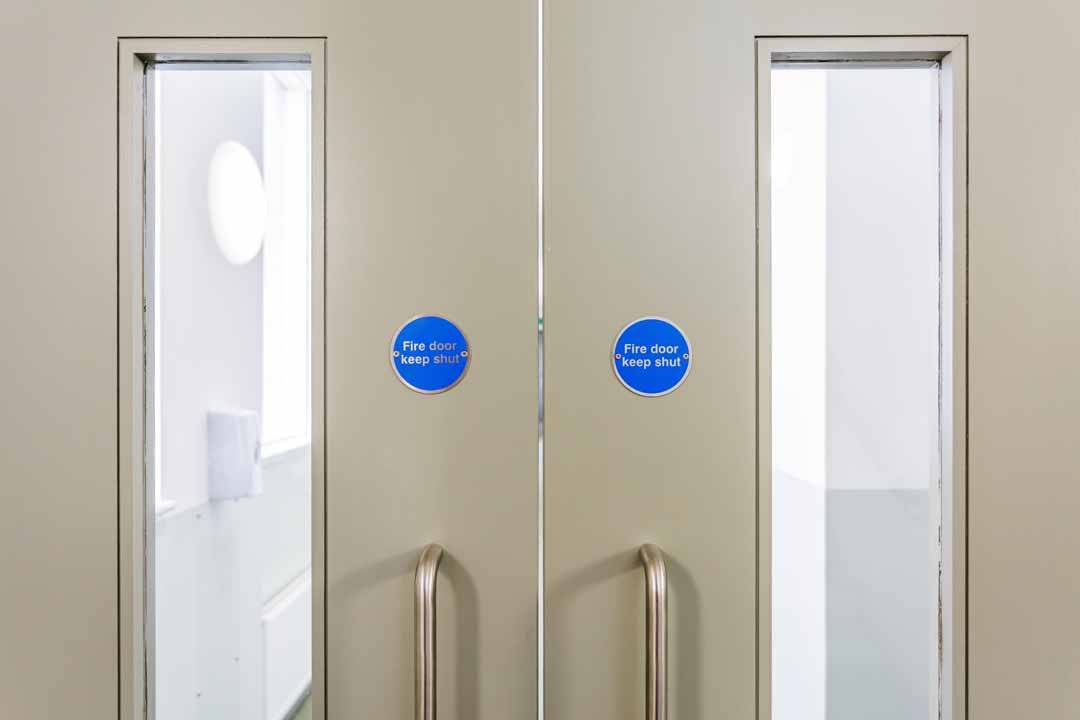
One of the most complex areas of compliance in heritage properties is fire door remediation or replacement.
In some cases, existing doors may be capable of being upgraded to improve fire resistance. This can involve approved systems such as intumescent coatings or specialist products (for example, Envirograf solutions), applied strictly in accordance with manufacturer guidance and risk assessor approval.
In other situations, bespoke fire-rated doors may be required. These must replicate the original character, materials, and design of the building. Achieving compliance while matching historic detailing can present additional technical considerations – including timber density, panel configuration, glazing, and ironmongery.
All fire door work must meet the functional requirements of the Building Regulations 2010 and the Regulatory Reform (Fire Safety) Order 2005. This can be achieved by following recognised guidance such as the Approved Documents and relevant British Standards, or through other accepted benchmarks. In heritage premises, this often involves moving away from strictly prescriptive guidance and adopting a risk-based approach, as defined within the Approved Documents.
The process is rarely quick and often requires careful coordination between contractors, risk assessors, and local authorities.
Minimising Intrusion: Wireless Fire Alarm Systems
In older or listed buildings, running new cabling can be disruptive and visually intrusive.
Radio (wireless) fire alarm systems offer a practical alternative where cables cannot be installed, reducing surface damage and preserving the existing structure.
Our team has installed thousands of wireless fire alarm devices across residential and commercial environments, including occupied and heritage buildings, where protecting the building’s original structure is essential. Our knowledge of heritage and challenging environments allows us to design systems that remain compliant while respecting the structure and character of the property.
As with any fire alarm installation, system design must meet the required category standards
and be carried out by appropriately accredited contractors.
Identifying Risk Within Historic Layouts
Older buildings frequently include:
● Narrow staircases
● Original beams and materials
● Irregular layouts
● Mixed-use spaces
A competent Fire Risk Assessment (FRA) will identify how these features influence escape routes, compartmentation, and alarm requirements.
The building’s use is equally important. A public venue, residential setting, or office environment will each present different risk parameters.
Managing expectations at an early stage is essential. Compliance within heritage settings can involve significant time, coordination, and cost.
Bridgwater Arts Centre – Grade I Listed Project

In 2025, our team completed a major fire, security, and access project within Bridgwater Arts Centre, a Grade I listed building.
The project required:
● Installation of a Category L1 fire alarm system
● Careful positioning of EN54-23 compliant VAD alarms
● Integration of security and access control systems
● ADIA-compliant automatic door installation
All works were carefully planned to maintain the character of the building while ensuring compliance.
Working Within a Complex Framework
Fire safety compliance in listed buildings is rarely straightforward. It requires:
● Technical knowledge
● Understanding of heritage construction
● Accredited installation standards
● Collaboration with local authorities
● Clear communication with clients
While the process can be complex, careful planning ensures safety requirements are met without unnecessary impact on historic character.
If you are reviewing fire safety measures within a heritage or listed property, our team can provide practical guidance and accredited installation services suited to your building – please get in touch.